

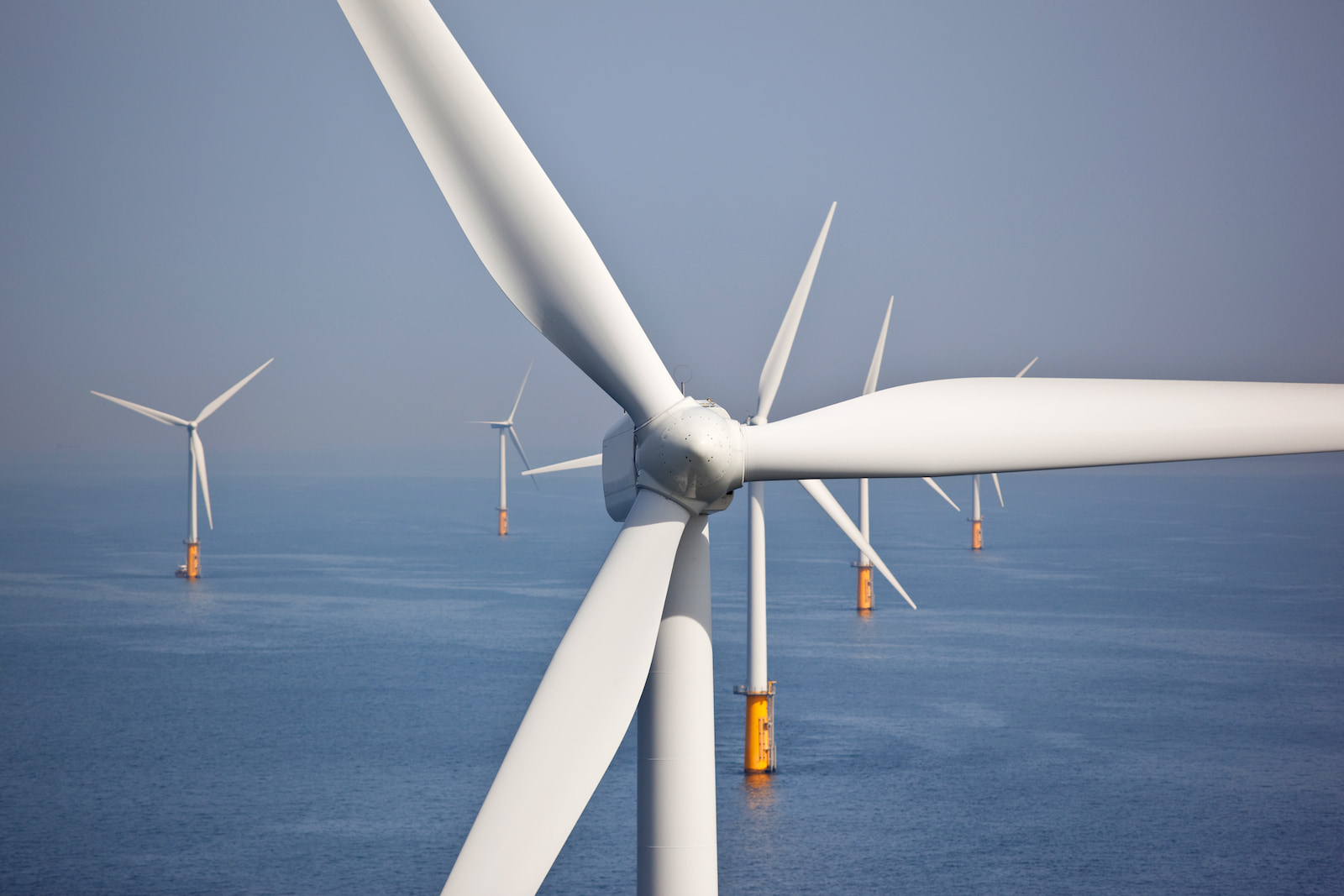
OFFSHORE WIND ENERGY
WORKING TOGETHER
FOR A SUSTAINABLE FUTURE
Connecting European Offshore Wind Projects with International Supply Chains.
We are WeBridge. WeBridge stands as an independent advisory firm, bridging the gap between European offshore wind developers and international suppliers and service providers.
WHAT WE OFFER
Our Services
Specialist advisory across the full offshore wind value chain — from developers and suppliers through to investors and insurers.
For Developers
Bridging demand and supply gaps to help European developers build successfully.
Learn more 02For Suppliers
Tailored business development for a successful entry into the European market.
Learn more 03For Investors
Market insight, risk assessment and due diligence to support investment decisions.
Learn more 04For Insurers
Navigating the offshore wind insurance landscape with confidence.
Learn moreHOW ARE WE DIFFERENT
Why WeBridge
Extensive Experience
A strong team with successful track record in European offshore wind market
Deep Industry Knowledge
A thorough understanding of European offshore wind market and developer’s requirements
Strong Network
Established connections with key industry stakeholders, including developers and EPCI contractors
Cultural Bridge
Effective communication and collaboration between International and European counterparts
FROM THE INSIGHTS DESK
WeBridge Insights
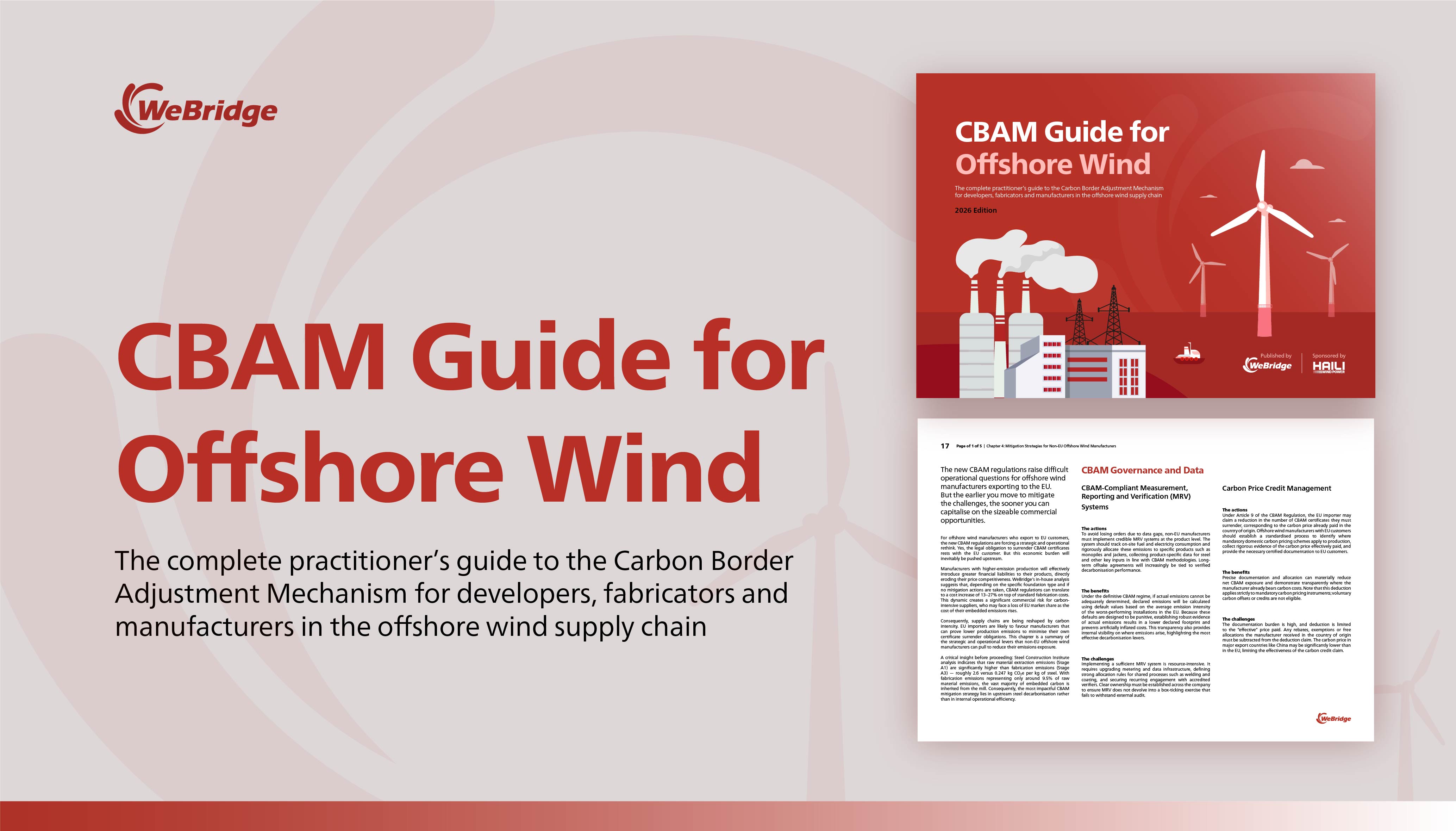
CBAM Guide for Offshore Wind (2026)
The Carbon Border Adjustment Mechanism (CBAM) represents one of the most significant regulatory shifts to affect the offshore wind supply chain in a generation. As a levy on the carbon embedded in imported goods, it touches every party involved in bringing an offshore wind project to completion — from the steel mills of East Asia to the European developers installing foundations in the North Sea.
Read
The Mingyang Decision: What It Means for China's Offshore Wind Supply Chain
On 26 March 2026, the UK government announced that turbines supplied by Mingyang Smart Energy cannot be used in UK offshore wind projects. The decision followed more than two years of deliberation, triggered when offshore wind developers sought a formal government position on whether to include Mingyang hardware in their projects.
Read
UK Removes Tariffs on Offshore Wind Components: Supply Chain Relief or Structural Fix?
On 10 March 2026, the UK Department for Business and Trade announced the elimination of import tariffs on 33 industrial goods used in offshore wind manufacturing, effective 1 April 2026. The measure operates through an Authorised Use (AU) procedure, which reduces customs duty to zero on eligible imports provided they demonstrably enter the offshore wind manufacturing process.
ReadCOMMON QUESTIONS
Frequently Asked Questions
WeBridge is an independent advisory firm that bridges the gap between European offshore wind developers and international suppliers. We provide specialist consulting services to developers, suppliers, investors and insurers, facilitating successful collaborations across the offshore wind supply chain.
Offshore wind energy is electricity generated by wind turbines installed in bodies of water, typically on the continental shelf. Turbines are mounted on fixed foundations (such as monopiles or jackets) or floating platforms and connected to the onshore grid via subsea cables. Europe is the world's leading market, with the UK, Germany, the Netherlands and Denmark operating the largest installed capacity.
The Contracts for Difference (CfD) scheme is the UK government's primary mechanism for supporting new offshore wind projects. Developers bid in competitive allocation rounds (AR) for a guaranteed 'strike price' per megawatt-hour of electricity generated. If the market price falls below the strike price, the government pays the difference; if it rises above, the developer pays back. CfD provides long-term revenue certainty, enabling projects to secure financing.
The Carbon Border Adjustment Mechanism (CBAM) is an EU regulation that places a carbon price on imports of carbon-intensive goods — including steel, aluminium, cement and electricity — entering the European Union. For the offshore wind industry, CBAM means that importing foundations, towers, and other steel-intensive components from non-EU countries now requires purchasing CBAM certificates equivalent to the EU carbon price, increasing procurement costs and adding compliance obligations for developers and manufacturers.
We offer comprehensive business development services tailored to each supplier's specific needs, including market analysis, strategic positioning, introductions to European developers and EPCI contractors, regulatory guidance and ongoing support to ensure a successful market entry and sustainable growth in the European offshore wind sector.
We provide complementary specialist services to European offshore wind developers, including supply chain optimisation, international supplier sourcing and qualification, commercial and technical due diligence, and strategic advisory — helping bridge demand and supply gaps in the European market.
Offshore wind supply chain management is the coordination of sourcing, manufacturing, logistics and installation of all components needed to build and operate an offshore wind farm — from turbines and foundations to subsea cables and installation vessels. Effective supply chain management addresses capacity bottlenecks, quality assurance, lead times and cost optimisation across a global network of manufacturers and service providers.
Yes. WeBridge offers a range of services to both debt and equity investors in the offshore wind industry, designed to support investing and lending decisions, risk assessment, due diligence processes and ongoing portfolio monitoring throughout the project lifecycle.
WeBridge primarily focuses on the European offshore wind market, including the UK, Germany, the Netherlands, France, Denmark, Poland and other emerging markets. We also work with international suppliers from China and other global supply chain hubs looking to enter or expand in Europe.
WeBridge publishes regular insights including in-depth articles, the Global Offshore Wind Weekly newsletter and event coverage. Visit our Insights page to explore our latest analysis, or subscribe to our newsletter to receive updates directly.